Directives: Automations made simple and reliable

If you’ve set up an automation before, you know it can be tedious and complex. It usually means learning separate software, working through multiple configuration steps, and fixing things every time a small change breaks the workflow. And because traditional automations follow strict rules, any task that requires judgment or involves unfamiliar inputs still requires the involvement of a person to see it through.
That’s why Viaduct built Directives. ViaDuck (aka “The Duck”), our AI Assistant, already has access to all of your data and speaks your organization’s language. Directives turn what you ask the Duck into automations that run on their own, without the usual setup.
Directing Duck is easy
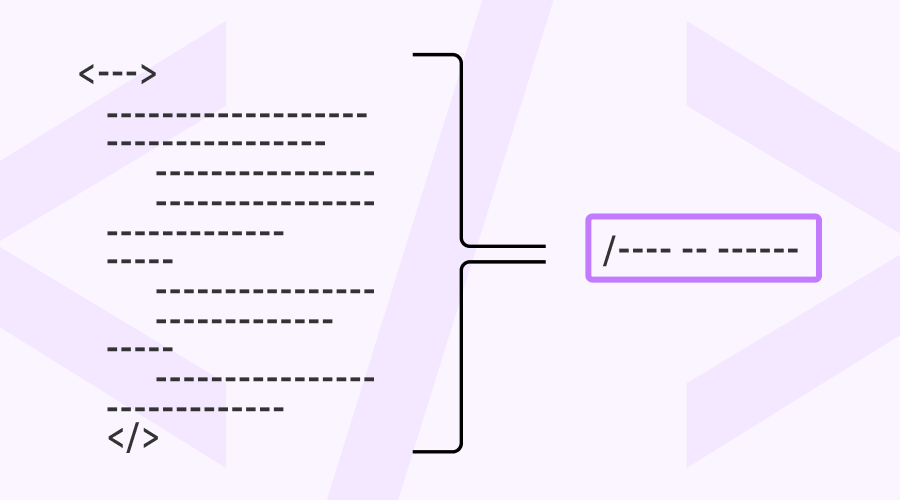
If you can describe a task, you can automate it. Most Directives start in one of two ways: a request or analysis you want repeated, or a time consuming task you want off your plate. Just tell the Duck what you want in plain language.
The Duck handles the rest. It helps write the instructions and tests them in a sandbox environment so nothing affects your production systems. Once the test has been reviewed and approved, it’s saved as a Directive, and you choose when it runs: on a daily or weekly schedule, when an email arrives, or when new data comes in from an asset.
For example, a warranty team might give the following prompt:
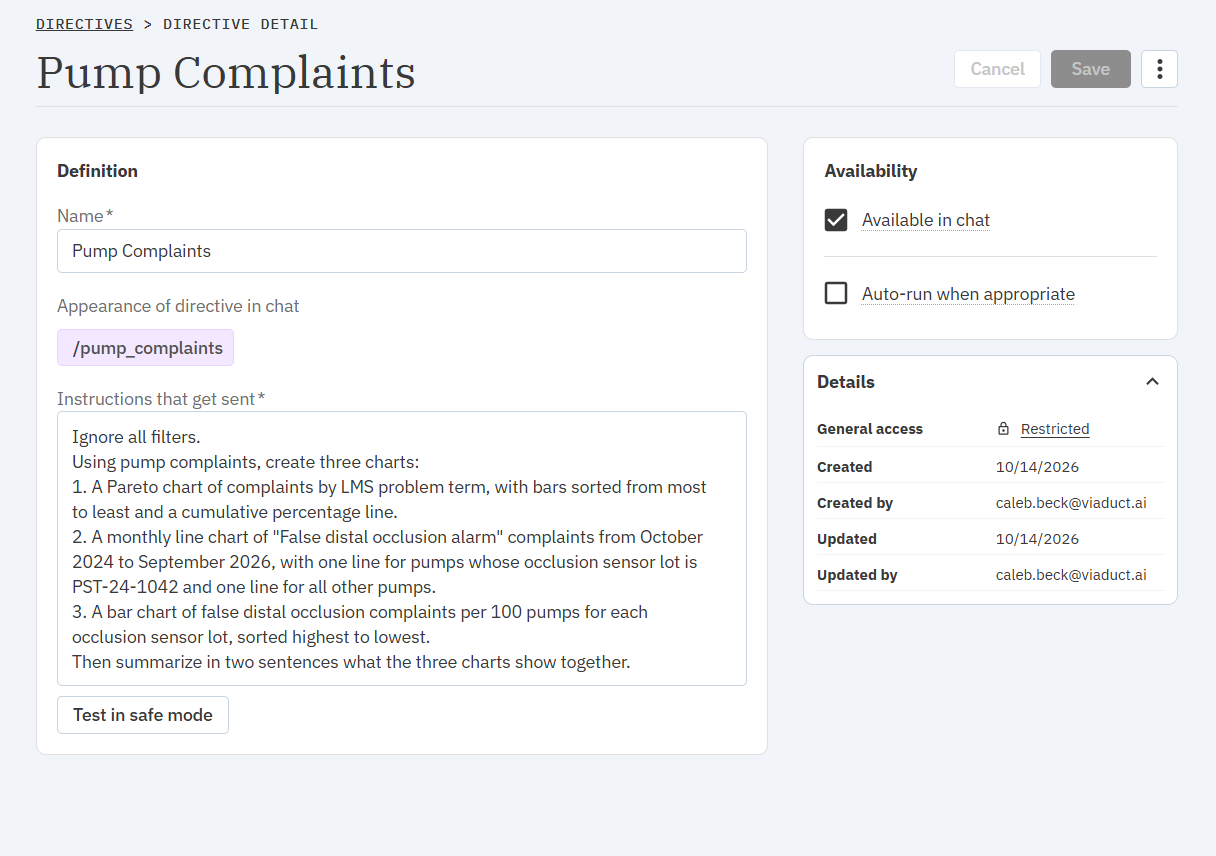
Using pump complaints, create three charts.
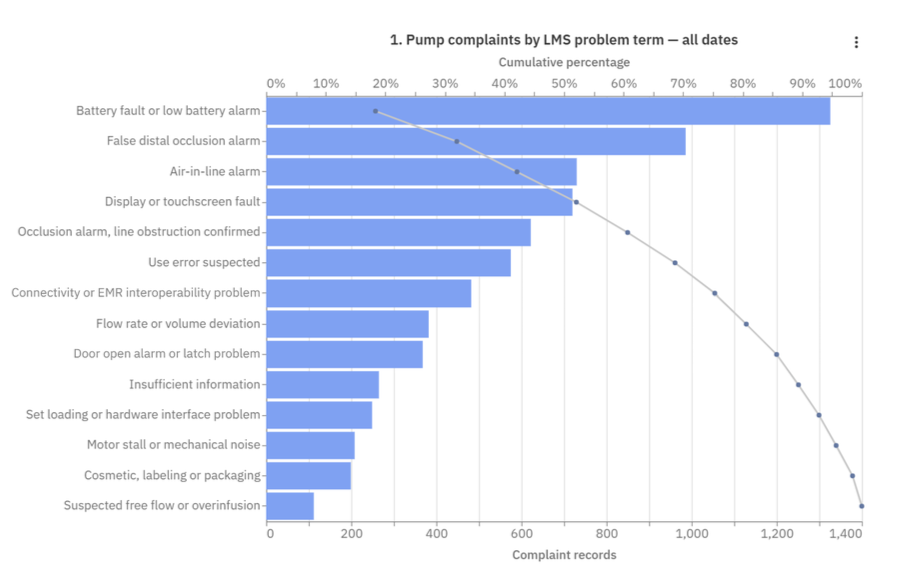
1. A Pareto chart of complaints by LMS problem term, with bars sorted from most to least and a cumulative percentage line.
2. A monthly line chart of "False distal occlusion alarm" complaints from October 2024 to September 2026, with one line for pumps whose occlusion sensor lot is PST-24-1042 and one line for all other pumps.
3. A bar chart of false distal occlusion complaints per 100 pumps for each occlusion sensor lot, sorted highest to lowest.
Then summarize in two sentences what the three charts show together.
Every week, the Duck runs the analysis and delivers three charts, along with a short summary of anything that needs attention. Here’s a screenshot of the first chart:
What makes Directives better than traditional automations
They’re easy to set up. Creating an automation is as simple as describing what you want to happen. The Duck interprets your request and makes sure the output is structured and actionable.
They go beyond fixed rules. Traditional automations follow if-then logic. Directives can be as strict or as flexible as you need, weighing context like whether one production line’s output looks unusual compared to the others, even without a set threshold.
They know your business. Directives have access to all of your data, speak your organization’s language, and follow your internal policies.
How manufacturing teams benefit from Directives
- Act faster. Directives run on the triggers you set, such as a schedule, an incoming email, or new data sets, so your teams can act quickly with the latest information. For example, when new claims data is ingested into the platform, a Directive automatically runs and alerts the quality team to any spikes in their data.
- Get consistent answers. Teams across the organization use the same Directive so everyone is always working from the same set of information. For example, when teams use the same Directive, they are working off the same data to drive decisions instead of spending time debating the accuracy of the data.
- Boost productivity. Directives have replaced hours of manual work that was previously spent on data prep and analysis. Teams now spend less time reacting to issues and more time getting ahead of them. For example: an engineer or analyst who used to spend Monday mornings preparing a status report now receives the report automatically in their email inbox before they arrive at work.
What could you use a Directive for?
Any task you can describe, the Duck can turn it into a Directive. Here are a few ideas to get started:
- Answer questions based on your internal documentation
- Verify work orders and ensure they are compliant with vendor policies
- Alert your plant manager to early telematics drift
- Build reports on cost trends
Want to see what Directives can automate for your team? Book a demo with Viaduct.